



Eliminating First-Part Scrap: The Operator’s Guide to Perfect Gear Hobbing Setups
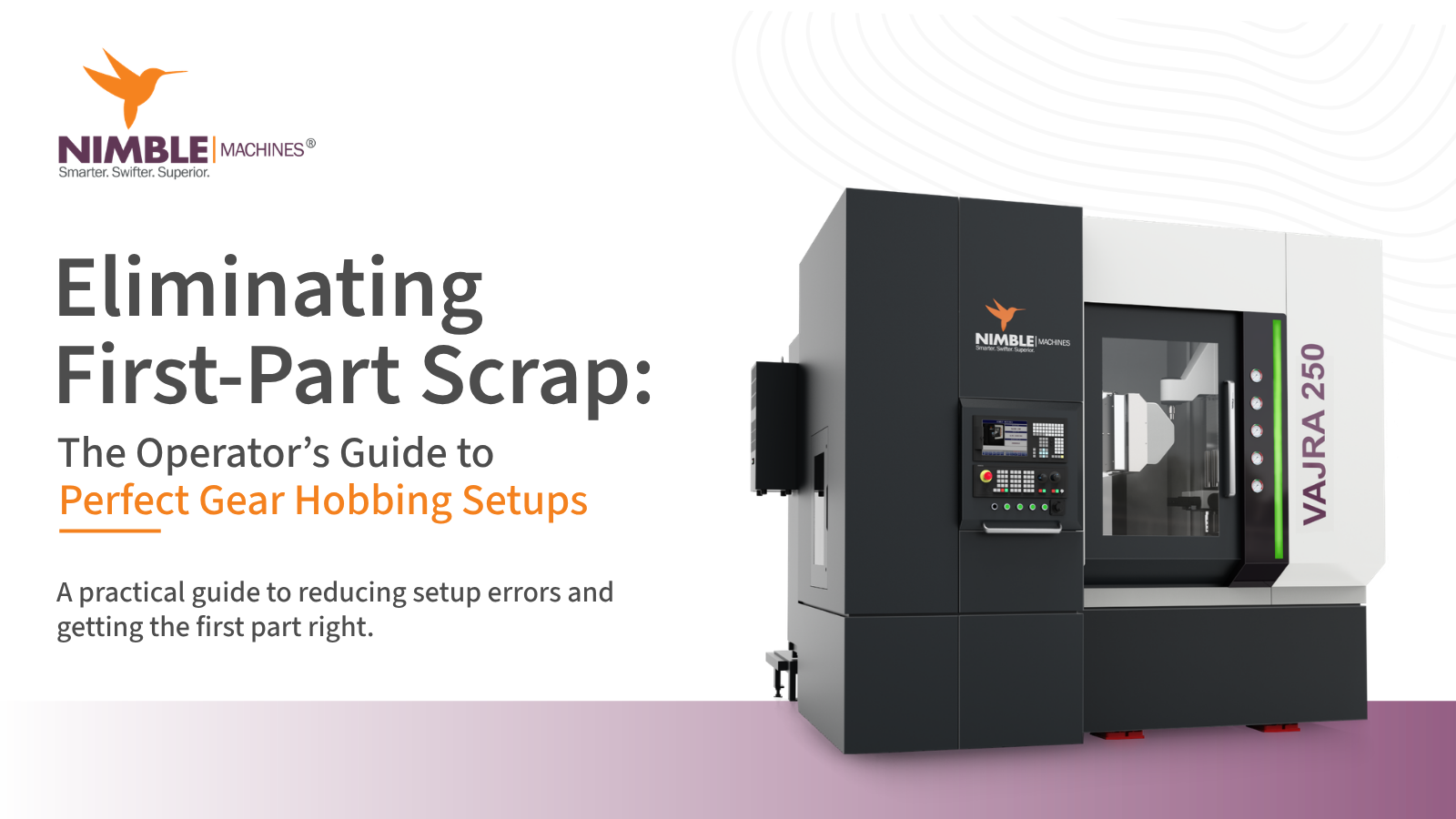
For a machine operator on a busy shop floor, the most stressful part of the shift is not continuous production—it is the setup. Transitioning from one gear batch to an entirely new profile carries a massive financial risk: the dreaded “first-off” part.
When dialing in a CNC Gear Hobbing machine for a new job, the operator must align the work holding, verify hob runout, and trust that the CNC parameters perfectly match the physical tooling. A single microscopic error at this stage results in first-part scrap. A single micron level error at this stage results in first-part scrap. Scrapping a high-value automotive or aerospace component right out of the gate destroys profitability and forces the operator to waste hours troubleshooting.
Fortunately, eliminating first-part scrap is not a matter of luck. It is achieved through rigid adherence to setup protocols and leveraging modern machine intelligence. Here is the definitive operator’s guide to mastering the CNC Gear hobbing setup for perfect, first-time accuracy.
The Root Causes of Setup Errors
Before an operator can prevent a bad part, they must understand why the first piece usually fails. In gear manufacturing, setup errors almost always stem from three physical misalignment issues:
- Workpiece Runout: If the raw metal blank is not seated perfectly flat and concentric in the fixture, the hob will cut a gear with severe pitch and lead errors.
- Hob Arbor Misalignment: Dirt, burrs, or thermal expansion on the hob arbor interface will cause the cutting tool to wobble, destroying the gear’s tooth profile and surface finish.
- Parameter Mismatch: Human error during data entry—such as inputting the wrong module, number of teeth, or feed rate into the CNC control—will guarantee a catastrophic first cut.
The Operator’s Checklist for Perfect Setup
To maintain absolute gear hobbing accuracy from the very first cut, operators should follow a strict, standardized setup checklist.
- Step 1: Deep Clean the Interfaces. Precision begins with cleanliness. Before mounting the hob or the workpiece, meticulously clean the spindle taper, the hob arbor, and the workholding fixture. A single metal chip caught between the fixture and the part will induce enough runout to scrap the component.
- Step 2: Indicate for Zero Runout. Never trust a visual seating. Use a high-quality dial indicator to physically verify the runout of the mounted gear blank and the clamped hob. Dialing these components down to micron-level concentricity before pressing “Cycle Start” is the ultimate defense against profile errors.
- Step 3: Verify Tailstock Pressure. For shaft and spline applications, the tailstock provides critical rigid stability. Ensure the hydraulic tailstock pressure is perfectly calibrated to the workpiece length and material. Too little pressure causes chatter; too much pressure can bow the shaft.
- Step 4: Execute a Dry Run. If the machine software allows, perform a slow-feed air cut with the tool backed off the workpiece. This allows the operator to visually verify clearances, the axial feed path (Z-axis), radial plunge depth (X-axis), and coolant nozzle targeting directly at the cutting zone before running the actual cut.
How Technology Eliminates Setup Anxiety
Even with the best operators, conventional machines with complex mechanical linkages leave room for human error. To permanently solve this, manufacturing facilities across major hubs like Bengaluru, Pune, and Chennai are upgrading to intelligent machinery that actively assists the operator.
This is where Nimble Machines transforms the shop floor. The VAJRA Series CNC Gear Hobbing Machine is engineered specifically to eliminate the anxiety of complex setups and protect your profit margins from first-part scrap.
- Conversational CNC Controls: The VAJRA Series features intuitive, user-friendly software interfaces. Operators no longer need to write complex G-codes. By simply inputting the gear geometry and tooling data into a visual macro, the machine calculates the optimal synchronization, completely eliminating mathematical entry errors.
- Intelligent Sensor Alignment: For complex operations like hard hobbing, the VAJRA Series utilizes custom alignment algorithms. The machine’s sensors automatically find the gear’s existing reference features and perfectly synchronize the tool path. This takes the guesswork out of the operator’s hands.
- Direct Drive Rigidity: By eliminating mechanical gear trains and belts in the spindle, Nimble Machines provides zero-backlash direct-drive technology. When the operator sets the machine, it stays perfectly locked in that position, ensuring the first part and the ten-thousandth part are identical.
Securing Your Shop Floor Productivity
An operator’s time should be spent cutting metal, not fighting the machine during changeovers. By standardizing your setup protocols and investing in the operator-friendly technology of the VAJRA Series, you can completely eradicate the financial drain of setup scrap. When you empower your operators with the right tools, gear hobbing accuracy becomes a guarantee, not a guessing game.
